
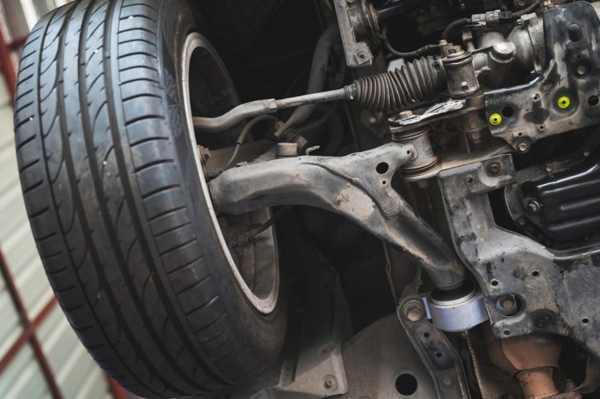
Driving with a bad lower control arm can be dangerous because the control arm helps keep the wheel in the correct position while the vehicle steers, brakes, and moves over bumps. The level of risk depends on what has failed: a worn bushing may first cause steering wander and tire wear, while a loose ball joint, bent arm, cracked arm, or damaged mounting point can lead to sudden loss of wheel control.
Do not continue driving if the steering changes suddenly, the vehicle pulls during braking, the wheel shifts in the wheel opening, or there is severe knocking or looseness. Have the vehicle towed and inspected.
How dangerous is a bad lower control arm?
| Condition | Typical effect | Risk level and action |
|---|---|---|
| Minor surface cracking in a bushing with no looseness | May indicate aging rubber | Inspect soon and monitor; confirm there is no separation |
| Torn or separated control-arm bushing | Arm can move during braking and cornering | Avoid unnecessary driving and repair promptly |
| Loose or worn ball joint | Wheel position and steering can become unpredictable | High risk; towing is the safer choice |
| Bent control arm after an impact | Alignment and suspension travel are altered | Stop driving until inspected |
| Cracked arm or damaged mounting bracket | Structural strength is compromised | Do not drive |
| Ball joint beginning to separate | The knuckle may no longer remain attached correctly | Immediate tow required |
The term “bad control arm” can describe several different faults. Diagnosis must identify whether the problem is the arm body, bushings, ball joint, mounting hardware, or chassis attachment.
What does a lower control arm do?
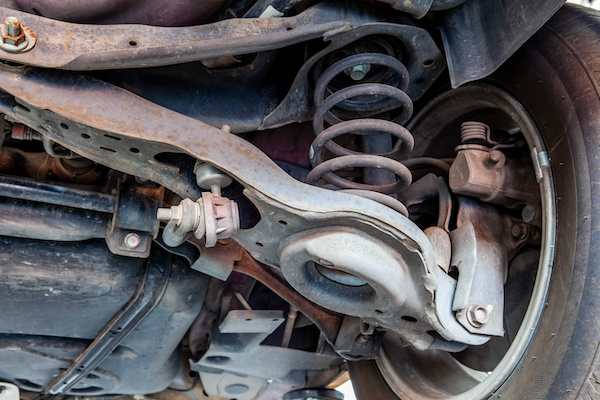
The lower control arm connects the steering knuckle or wheel carrier to the chassis or subframe. Its pivots allow the wheel to move vertically while controlling its forward, rearward, and sideways position.
Most lower control arms use rubber or hydraulic bushings at the inner mounts and a ball joint at the outer end. The bushings isolate vibration and permit a limited arc of movement. The ball joint allows the knuckle to steer and move with the suspension.
Because the arm locates the wheel, unwanted movement changes alignment dynamically. The vehicle may look aligned while parked but change toe or caster when braking or accelerating.
For a full explanation of the component, see what a lower control arm is and what it does.
Symptoms of a bad lower control arm
Vehicle pulls or changes direction during braking
A separated rear control-arm bushing can allow the wheel to move backward when brake force is applied. That movement may change toe and caster, causing the vehicle to pull or feel unstable.
Clunking or knocking
A clunk during braking, acceleration, or bumps can come from a loose bushing, ball joint, mounting bolt, or damaged arm. The exact timing and location of the noise help diagnosis, but the suspension must still be inspected.
Loose, delayed, or inconsistent steering
Excess movement at the control arm can make the steering response feel delayed or require frequent corrections. A loose tie rod, wheel bearing, or steering-rack fault can cause similar symptoms.
Uneven tire wear
A moving control arm can prevent alignment angles from remaining stable. Feathering, shoulder wear, or a rapid change in one tire should trigger a suspension inspection before another alignment is attempted.
Steering-wheel vibration
The wheel may oscillate when the arm no longer controls its path correctly. Tire imbalance, a bent wheel, brake faults, and worn steering parts must also be ruled out.
Wheel position looks different
A wheel sitting farther forward or backward in the opening can indicate a bent arm, severe bushing failure, or damaged mounting point. Do not drive until the cause is confirmed.

What can happen if you keep driving?
Loss of stable wheel alignment
The control arm determines part of the wheel’s path. If its pivots move, the tire can point in a different direction as loads change. This reduces predictable braking and cornering behavior.
Tire damage
Dynamic alignment changes can wear a tire rapidly. In a severe failure, the tire may rub the body, spring, arm, or another component.
Damage to nearby suspension and steering parts
Excess movement can place abnormal loads on the ball joint, tie rod, wheel bearing, shock or strut, CV axle, and mounting brackets. Repairing the control arm early may prevent a larger repair.
Ball-joint or mounting separation
The most serious outcome is loss of the connection that keeps the steering knuckle located. A separated ball joint or fractured mounting point can allow the wheel to collapse from its normal position.
When should you stop driving immediately?
Stop in a safe place and arrange towing if any of these conditions are present:
- the steering suddenly becomes loose, heavy, or unpredictable;
- the vehicle pulls strongly when braking;
- a loud knock is accompanied by a change in wheel position;
- the tire rubs another component;
- a ball joint has measurable severe play or a torn housing;
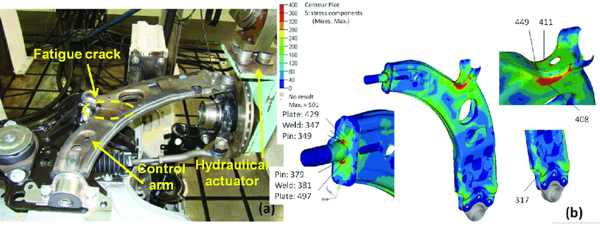
- the control arm is bent, cracked, or heavily corroded;
- a mounting bolt or bracket is loose or damaged;
- the vehicle was recently involved in a curb, pothole, or collision impact and now handles differently.
If a technician has only found early bushing deterioration with no looseness or driving symptoms, schedule repair promptly and follow the technician’s vehicle-specific advice. There is no universal safe mileage for a worn control arm.
Is the problem the control arm, bushing, or ball joint?
Control-arm bushing
Common signs include movement during braking, a dull clunk, steering wander, and torn or separated rubber. Read how long you can drive with bad control arm bushings for the bushing-specific safety guidance.
Ball joint
A worn ball joint may produce play, clicking, wandering, or uneven tire wear. Inspection procedures differ by suspension design because some ball joints must be checked with the suspension loaded and others unloaded.
Control-arm body
The arm itself may bend after an impact or crack because of collision damage, severe corrosion, an incorrect repair, or an extreme overload. A bent arm should not be straightened unless an approved repair procedure specifically permits it.
Mounting hardware or chassis bracket
Loose bolts, elongated holes, corrosion, or a cracked subframe can imitate a failed arm. Replacing the arm without repairing the mounting point will not solve the problem.
How a lower control arm is inspected
A complete inspection should include:
- comparing wheel position and ride height on both sides;
- checking tire wear and alignment history;
- examining the arm for bending, cracks, impact marks, and corrosion;
- inspecting bushings for separation, extrusion, and abnormal movement;
- checking the ball joint according to the vehicle manufacturer’s procedure;
- checking mounting bolts, brackets, subframe, and nearby steering parts;
- performing an alignment check after the mechanical repair.
Repair options
Replace the bushing
A bushing-only repair may be suitable when the arm is straight, the ball joint is serviceable, and the bushing can be installed correctly with the proper tooling.
Replace the complete control arm
A complete assembly is often chosen when the ball joint is integrated, the arm is damaged, several bushings are worn, or press labor makes the bushing-only repair uneconomical.
New bonded-rubber bushings must be tightened according to the specified procedure. Many designs require final torque at normal ride height to avoid twisting the rubber at rest. An alignment should follow replacement when wheel-locating parts have been disturbed.
Our separate guide explains the factors behind control-arm and bushing replacement cost.
Frequently asked questions
Can a bad lower control arm cause death wobble?
Loose control-arm bushings or joints can contribute to uncontrolled axle or steering movement, particularly on solid-axle vehicles. However, severe oscillation can involve several components, tires, alignment, and steering geometry. The complete system must be inspected.
Can an alignment fix a bad control arm?
No. Alignment adjustments cannot compensate for a part that bends or moves under load. Repair the mechanical fault first, then align the vehicle.
Should lower control arms be replaced in pairs?
Pair replacement is not mandatory for every vehicle. Inspect both sides and follow the manufacturer or repairer’s recommendation. Pair replacement may be appropriate when both sides have similar wear or when balanced components are required.
How long does a lower control arm last?
There is no fixed replacement interval for every vehicle. Service life depends on design, roads, corrosion, impacts, loads, and bushing or ball-joint condition. See our dedicated control arm lifespan guide.
Bottom line
A bad lower control arm ranges from an aging bushing to a structural or ball-joint failure. The serious cases can cause sudden loss of wheel control. Stop driving when steering, braking, wheel position, or suspension noise changes significantly, and have the complete arm, bushings, ball joint, hardware, and mounting points inspected before the vehicle returns to the road.


