
How to change sway bar bushings?
Is your customer complaining about a distinct "clunking" noise whenever they drive over a speed bump or turn a sharp corner? This sound often signals that the humble rubber isolators in the suspension system have failed. Replacing sway bar bushings is a straightforward repair that restores vehicle stability and cabin silence.
To change sway bar bushings, lift the vehicle safely, remove the mounting brackets, peel off the old rubber, clean the stabilizer bar, and install the new bushings with appropriate grease. Re-torque the brackets to spec. This maintenance restores the sway bar’s ability to effectively combat body roll.

While the physical act of changing the bushing is simple, understanding the component’s engineering is crucial for selecting a replacement that won’t fail again in six months.
What does a sway bar bushing do?
The sway bar bushing acts as a flexible pivot point, securing the metal stabilizer bar to the vehicle’s chassis while allowing it to twist. It cushions the impact from road irregularities, preventing metal-on-metal contact and ensuring the suspension geometry reacts correctly to cornering forces.
A sway bar bushing manages NVH (Noise, Vibration, and Harshness) while permitting the stabilizer bar to rotate. It serves as a dampening interface that absorbs road shock, ensuring that the energy transfer during a turn is controlled and smooth rather than abrupt and noisy.

Dive Deeper: The Engineering of NVH and Material Science
Many technicians view a sway bar bushing as merely a piece of rubber that holds a metal bar in place. However, from an engineering perspective, it is a sophisticated tuning element within the suspension system. The primary function goes beyond simple mounting; it is about managing NVH and maintaining dynamic alignment.
When a vehicle enters a corner, the chassis leans. The sway bar twists to resist this lean, transferring force from one side of the suspension to the other. The bushing must support this immense torsional load without collapsing. If the material is too soft, the bar moves too much, leading to delayed steering response (hysteresis). If it is too hard, it transmits road vibration directly to the cabin, ruining the ride quality.
At GSW, we utilize advanced CAE Analysis to determine the optimal geometry for these components. But geometry is nothing without the right material properties. The rubber must possess high Tensile Strength to resist tearing under heavy loads. More importantly, we meticulously calibrate the Shore Hardness A of the rubber. A standard aftermarket bushing might use a generic hardness, but an engineered replacement must match the specific damping requirements of the vehicle’s chassis.
The bushing acts as a secondary spring. When the suspension articulates, the rubber undergoes compression and shear forces. A high-quality bushing dissipates this energy as heat (hysteresis loss) rather than returning it as bounce or noise. This is why the specific formulation of the rubber compound is critical. It determines how well the vehicle isolates the driver from the road surface while maintaining the structural rigidity needed for sharp handling. A failure in this material science results in a "sloppy" driving feel, even if the part looks visually intact.
Signs Your Sway Bar Bushings Are Failing
The most common indicator of failure is an audible clunking or rattling noise coming from the wheel well, particularly when driving over uneven pavement. Visually, you may see cracks, tears, or a noticeable gap between the rubber and the metal bar.
Signs of failure include persistent clunking noises over bumps, visible cracking of the rubber, and a "loose" feeling in the steering response. When the rubber loses its elasticity, the sway bar is no longer held tightly, allowing it to impact the mounting bracket.

Dive Deeper: Diagnosis and The Elastic Memory Loss
I recently watched a video by ChrisFix, one of the most respected DIY mechanics on YouTube, which perfectly illustrates the diagnostic process for this issue. In his guide on replacing front sway bar bushings, he demonstrates a simple yet effective test: with the car on the ground (or ramps), he grabs the sway bar near the bushing and shakes it vigorously.
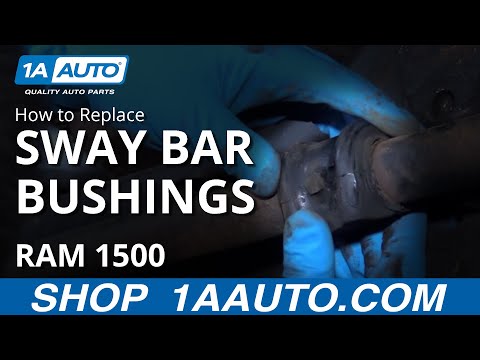
In the video, you can hear a clicking sound even with manual force. This signifies that the bushing has suffered from "compression set." In engineering terms, the rubber has lost its Elastic Memory. Over thousands of heat cycles and millions of compressions, the polymer chains in inferior rubber relax. They take on the shape of the compressed state and no longer spring back to hold the bar tight.
When ChrisFix removes the old bushing, the difference is stark. The old part is often oval-shaped rather than round. This gap, sometimes only a millimeter wide, is the source of the loud clunking noise heard inside the cabin. The noise is essentially the sound of the metal bar hammering against the bracket or the hardened rubber wall.
From a mechanic’s view, explaining this to a customer is vital. It’s not just about noise; it’s about the delay in reaction time. When the steering wheel is turned, the sway bar should react instantly. If there is a gap in the bushing, the bar must first travel through that empty space before it engages. This creates a "dead zone" in the handling, making the vehicle feel unstable or unresponsive during emergency maneuvers. Diagnosing this correctly saves the customer from unnecessary shock absorber replacements when a simple bushing swap is the cure.
How to fix the problem (The Role of Vulcanization)
Fixing the problem permanently requires more than just buying the cheapest rubber part available; it requires selecting a component manufactured with precise curing processes. The longevity of a replacement bushing is dictated almost entirely by the quality of its manufacturing process.
The solution is to replace the worn components with bushings that have undergone controlled Vulcanization. This ensures the rubber has the durability to withstand years of abuse without becoming brittle or permanently deformed.

Dive Deeper: Why Vulcanization Defines Quality
Why do some aftermarket bushings fail after six months while OEM-grade parts last for years? The answer usually lies in one invisible but critical manufacturing step: Vulcanization.
Vulcanization is the chemical process where raw rubber is heated with sulfur (or other curatives) to create cross-links between polymer chains. Think of raw rubber as a plate of loose spaghetti—it’s soft and easily pulled apart. Vulcanization introduces "bridges" that connect these strands, turning the material into a cohesive, elastic 3D network.
At GSW, we adhere to a strict vulcanization standard. This is not a matter of just "cooking" the rubber; it requires a precise balance of temperature, pressure, and time.
- Under-cured rubber: If the process is too short or cool, the cross-linking density is low. The bushing will feel soft but will lack Tensile Strength. It will be sticky, wear out quickly due to abrasion, and suffer from poor heat resistance.
- Over-cured rubber: If the process is too aggressive, the rubber becomes too hard and brittle. While it might look tough, it has low Fatigue Life. It will crack under the repetitive stress of suspension travel (flexing millions of times).
We target the "Goldilocks Zone" of vulcanization. This optimization ensures that our bushings maintain their Shore Hardness A specification over a wide temperature range, from freezing winters to scorching summers. This process also maximizes the rubber’s resistance to compression set. When a mechanic installs a GSW bushing, the material is capable of being compressed by the bracket without losing its structural integrity. It pushes back against the metal with consistent force, year after year. This attention to the molecular structure of the rubber is what separates a premium chassis part from a generic commodity.
How to install sway bar bushings?
Installation involves cleaning the sway bar surface, applying the correct lubricant, and torquing the brackets to manufacturer specifications. Neglecting the cleaning or lubrication steps can lead to immediate squeaking or premature wear of the new part.
To install, thoroughly clean the sway bar of rust and debris, apply a silicone-based grease to the bushing’s interior, and tighten the bracket bolts to the specified torque. Ensuring the bar is smooth prevents abrasion on the new rubber.

Dive Deeper: Sales Enablement and Safety Consequences
When performing this installation, the most overlooked step is the preparation of the metal stabilizer bar itself. Over time, road grit and the friction from the old, failed bushing can wear grooves into the metal or leave rough rust deposits.
If a mechanic simply slaps a new bushing over a rusted, pitted bar1, the repair is doomed to fail. The rough surface acts like sandpaper. Every time the suspension moves, that rust grinds away at the interior of the new rubber. At GSW, we recommend mechanics use an emery cloth2 to polish the mounting area of the bar until it is smooth.
Furthermore, lubrication is a key talking point for sales enablement. Not all grease is created equal. Petroleum-based greases can attack certain rubber compounds, causing them to swell and degrade (turning into a jelly-like substance). We recommend using the specific silicone-based or PTFE-infused grease3 often supplied with premium kits. This reduces the coefficient of friction, allowing the bar to rotate freely without squeaking—a common customer complaint immediately after a "cheap" repair.
How to explain this to a car owner:
For the service advisor, the narrative should focus on protection. "Mr. Customer, we aren’t just stopping the noise. We are protecting the sway bar itself. If we leave these worn bushings in place, the metal bar will eventually be damaged by metal-on-metal contact. Replacing the entire sway bar is a significantly more expensive repair ($300-$500+) compared to simply changing these protective bushings now. Our GSW bushings use a high-grade rubber that resists this wear, saving you money in the long run."
By focusing on the Safety Consequences (handling stability) and the financial protection of the expensive metal bar, you elevate the conversation from a simple "part swap" to a necessary vehicle preservation service.
Conclusion
Changing sway bar bushings is a cost-effective way to restore new-car handling and eliminate annoying chassis noises. By choosing parts manufactured with optimized Vulcanization processes, you ensure long-lasting performance and customer satisfaction.
About the Author
Root is a Content & Operations Specialist at GSWAUTOPARTS with 5 years of industry experience. Leveraging his close proximity to our manufacturing floor, Root specializes in documenting product details and production processes. He focuses on translating technical insights about rubber and chassis parts into clear, helpful information for our customers.
This resource will guide you through the best practices for repairing rusted bars, ensuring a durable suspension repair. ↩
Exploring this link will provide you with detailed techniques on using emery cloth effectively for smooth finishes. ↩
Discover how silicone-based or PTFE-infused grease can enhance performance and longevity in your applications. ↩


