
How to check control arm bushings?
Steering instability and clunking noises often stem from worn suspension components. If your vehicle feels loose, learning how to check control arm bushings is the essential first step in restoring safety and performance.
To check control arm bushings, perform a visual inspection for tearing or oil contamination, then use a pry bar to test for excessive movement. A healthy bushing should resist significant displacement; if the rubber separates from the metal sleeve, immediate replacement is required to maintain vehicle alignment.

Professional mechanics and fleet managers understand that the control arm bushing is the silent guardian of chassis geometry, making regular diagnostic checks vital for long-term vehicle health.
What are Control Arm Bushings?
Control arm bushings are vibration isolators that act as the pivot point between the vehicle’s frame and the suspension’s control arms.
These components consist of an inner metal sleeve and an outer metal shell, bonded together by a high-grade rubber interface that allows for controlled movement.

Dive Deeper Section:
From a manufacturing perspective at GSW, a control arm bushing is far more than a simple rubber plug. The science lies in the Vulcanization process, where the rubber is chemically bonded to the metal sleeves under high heat and pressure. Unlike low-end aftermarket parts that use synthetic fillers, we utilize a specific Natural Rubber formulation. This material choice is critical because natural rubber offers superior elastic memory and resilience compared to cheaper SBR (Styrene-Butadiene Rubber) alternatives.
In the realm of engineering, we focus heavily on Shore Hardness A ratings. If a bushing is too soft, the steering feels "mushy"; if it is too hard, the driver feels every pebble on the road. GSW finds the "sweet spot" that optimizes NVH (Noise, Vibration, and Harshness) levels without compromising the component’s Fatigue Life. During our CAE Analysis (Computer-Aided Engineering), we simulate thousands of oscillation cycles to ensure the rubber does not de-bond from the sleeve.
When explaining this to a car owner, I compare the bushing to a human cartilage in a joint. Once that "cushion" wears out, it’s bone-on-bone (or metal-on-metal), which leads to expensive damage to the entire suspension system.
Why are Control Arm Bushings so important?
Bushings are the primary components responsible for maintaining the precision of a vehicle’s suspension geometry during acceleration, braking, and cornering.
A high-quality bushing ensures that the wheels remain properly aligned under load, directly impacting tire wear, steering response, and overall passenger comfort.

Dive Deeper Section:
The importance of control arm bushings is best understood through the lens of dynamic vehicle physics. When a vehicle hits a pothole, the force is transmitted through the wheel to the control arm. The bushing must absorb this kinetic energy through the deformation of its rubber core. If the rubber has hardened over time or lost its tensile strength, that energy is transferred directly into the chassis, leading to a degraded driving experience and increased NVH.
Furthermore, bushings are the "gatekeepers" of your wheel alignment. Even a 2mm tear in the rubber can allow the control arm to shift slightly during braking. This shift alters the toe and camber angles of the front wheels, leading to "steering pull" and accelerated tire scrubbing. In our manufacturing facility, we use CAE Analysis to predict how different rubber densities affect these alignment variables under extreme lateral force.
For a car owner, the sales enablement angle is simple: "Cheap bushings cost more in the long run." Replacing a pair of high-end tires because of a worn $30 bushing is a financial mistake that can be avoided with GSW’s precision-engineered parts.
5 Signs of a Failing Control Arm Bushing
Identifying a bad bushing early prevents secondary damage to the struts, ball joints, and expensive tires.
The most common symptoms include clunking noises over bumps, steering wheel vibration, uneven tire wear, steering wander, and visible cracking in the rubber.

Dive Deeper Section:
From a technician’s viewpoint, the "clunking" sound is often the final stage of failure, where the rubber has completely separated, allowing the metal inner sleeve to strike the outer shell. However, the more subtle sign is "Steering Wander." This occurs when the bushing no longer provides enough lateral stiffness to keep the control arm centered. On the highway, you may find yourself constantly correcting the steering wheel just to stay in a straight line.
Another critical angle is "Brake Judder." Many owners mistake this for warped brake rotors, but it is often the control arm moving backward and forward due to a torn bushing. At GSW, we test the Fatigue Life of our natural rubber to ensure it can withstand the high-torque environment of modern braking systems without developing these micro-tears.
To help a customer understand this, I explain that failing bushings are like wearing shoes with no soles. You can still walk, but you’ll feel every sharp rock, and eventually, your ankles (the rest of the car) will start to hurt.
How to replace lower control arm bushings?
Replacing bushings requires either a hydraulic press to swap the rubber unit or replacing the entire control arm assembly.
To replace just the bushing, remove the control arm, press out the old unit with a specialized tool, and carefully align the new bushing before pressing it in.

Dive Deeper Section:
The replacement process is where GSW’s manufacturing precision truly shines. One of the biggest challenges for mechanics is "bushing clocking." When installing a new bushing, it must be pressed in at the correct orientation (indexed) and tightened only when the vehicle is at its natural ride height. If a mechanic tightens the bolts while the car is on a lift with the wheels hanging, the rubber will be pre-twisted, drastically shortening its Fatigue Life.
From a material science perspective, we ensure our outer metal shells have a precise interference fit. If the shell is even 0.05mm too small, it will slip; too large, and it could crack the control arm during the press-in process. This is why our CAE Analysis1 includes tolerances for various aftermarket control arm housings. Using our specific natural rubber formula ensures that even after the stress of being pressed into a tight housing, the rubber maintains its structural integrity.
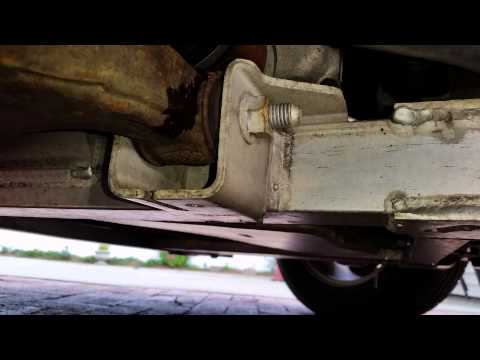
I recently watched a video that showed the "Pry Bar Method" for checking bushings while they are still on the car. This is a vital step before you commit to the labor-intensive process of replacement, as it confirms exactly which bushing has failed.
- Video Experience: I recently watched a video that perfectly illustrates how these components function under load. It highlights the subtle differences between a bushing that is merely "old" and one that has structurally failed, emphasizing why the rubber’s integrity is the most important factor in suspension stability.
- Video Embed: >

When talking to a shop owner, I emphasize the "Labor vs. Part2" cost. Replacing a bushing is labor-heavy. Therefore, using a GSW bushing made of premium natural rubber ensures the mechanic doesn’t have to do the same job twice due to a part failure six months later.
Conclusion
Checking your control arm bushings is vital for maintaining a safe, quiet, and smooth ride. By identifying wear early and choosing high-quality natural rubber replacements, you protect your vehicle’s alignment and tire life. Contact GSW Autoparts today for professional-grade suspension solutions engineered for durability.
About the Author
Root is a Content & Operations Specialist at GSWAUTOPARTS with 5 years of industry experience. Leveraging his close proximity to our manufacturing floor, Root specializes in documenting product details and production processes. He focuses on translating technical insights about rubber and chassis parts into clear, helpful information for our customers.


