
How to Replace Coil Spring Insulators: Restoring Ride Quality and NVH Performance
Is your customer complaining about a mysterious clunk from the suspension or a ride that feels harsher than usual? Often, the culprit isn’t the expensive shock absorber, but a small, overlooked rubber component. Ignoring this can lead to accelerated suspension wear and customer dissatisfaction.
A coil spring insulator is a rubber pad that sits between the coil spring and the vehicle’s frame or control arm. Its primary job is to dampen road vibrations, eliminate metal-on-metal noise, and maintain proper ride height. Replacing these insulators is critical for restoring factory-level NVH (Noise, Vibration, and Harshness) performance.

While often treated as an afterthought during strut replacements, the coil spring insulator is the first line of defense against road noise. Let’s explore what makes a high-quality insulator, how to identify failure, and the best practices for replacement.
What is a Spring Isolator?
A spring isolator acts as a protective interface within the suspension system, preventing direct contact between the steel spring and the mounting seat.
The spring isolator serves as a cushion, typically molded from rubber or polyurethane, designed to fit the specific helical contour of the coil spring. It creates a barrier that absorbs high-frequency vibrations before they transfer to the chassis.

Dive Deeper: The Material Science of GSW Insulators
When sourcing suspension parts, the difference between a generic aftermarket component and a premium OEM-replacement lies almost entirely in the material science. At GSW Autoparts, we prioritize Natural Rubber (NR) for our coil spring insulators, rather than cheaper synthetic alternatives like standard EPDM or thermoplastic polyurethane often found in budget lines.
Why do we insist on Natural Rubber? In the world of chassis engineering, Natural Rubber is the "Gold Standard" for NVH (Noise, Vibration, and Harshness) attenuation. It possesses superior Rebound Resilience. This mechanical property refers to the rubber’s ability to return to its original shape and energy state immediately after being compressed. When a car hits a bump, the spring compresses rapidly. A synthetic insulator with poor resilience might remain slightly compressed for a fraction of a second too long (hysteresis), transmitting the shock to the frame. Natural Rubber, however, reacts instantly, absorbing the kinetic energy and dissipating it as heat rather than noise.
Furthermore, we strictly control the Shore Hardness A of our insulators. If the rubber is too soft (e.g., below 60 Shore A), it may offer a plush ride initially but will suffer from premature compression set—permanently flattening out under the car’s weight. If it is too hard (e.g., above 80 Shore A), it will fail to dampen road noise, transmitting a "harsh" feeling to the driver. Our engineering team targets a specific hardness range that balances longevity with comfort.
Finally, the Vulcanization process is critical. During manufacturing, we optimize the cross-linking of the rubber polymer chains to maximize Tensile Strength and Fatigue Life. This ensures that even after millions of compression cycles in freezing winters or scorching summers, the insulator maintains its structural integrity without cracking or crumbling.
Why is a coil spring insulator necessary?
These components are essential for isolating the chassis from road inputs and preventing destructive metal-on-metal contact.
Without an insulator, the steel spring would grind against the steel or aluminum control arm, causing unbearable squeaking and grinding noises. Additionally, the insulator contributes to the vehicle’s static ride height.

Dive Deeper: The Physics of Noise and Corrosion
From a mechanic’s perspective, the coil spring insulator is not just a "noise dampener"; it is a crucial component for structural preservation. One of the most severe consequences of a missing or failed insulator is Galvanic Corrosion. In modern vehicles, suspension control arms are often made of aluminum alloys to save weight, while coil springs are high-carbon steel. When these two dissimilar metals come into direct contact in the presence of an electrolyte (like road salt and water), an electrochemical reaction occurs, accelerating rust and corrosion on the control arm or the spring seat. Over time, this can lead to structural failure of the spring seat itself.
From an NVH standpoint, the insulator acts as a "low-pass filter." Road texture creates high-frequency vibrations (rumble) that travel from the tire, through the wheel hub, and into the spring. Steel is an excellent conductor of vibration. If the spring is hard-mounted to the chassis, the entire car body acts as a speaker cabinet, amplifying that road rumble into the cabin. The rubber insulator breaks this transmission path.
Additionally, we must consider the geometry of the suspension. As a vehicle corners, the suspension compresses, and the coil spring naturally wants to rotate or twist slightly. A rubber insulator1 allows for this micro-movement without binding. If the spring binds against the metal seat, you will hear a distinct "popping" or "binding" noise when turning the steering wheel at low speeds. The insulator provides just enough friction to hold the spring in place while allowing enough compliance to prevent binding, ensuring smooth steering articulation and predictable handling.
What are the signs of a worn or failed coil spring insulator?
Common symptoms include audible suspension noises, visible rubber degradation, and a noticeable decrease in ride quality.
Drivers will often report clunking or groaning sounds when going over bumps or turning the steering wheel. Visual inspection may reveal the rubber is cracked, "pancaked" (flattened), or missing entirely.

Dive Deeper: Visual Diagnosis and Material Failure
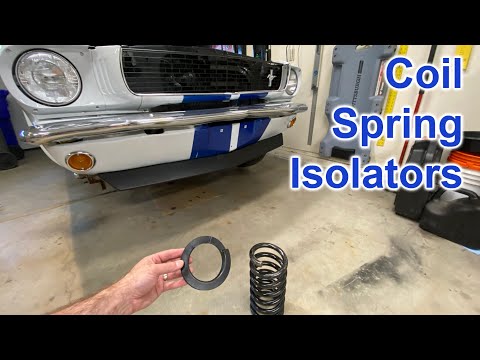
I recently watched a video by the channel Fix It With Franc titled "Installing Coil Spring Isolators," which provides a stark visual representation of why these components need replacement. In the video, Franc is working on the rear suspension of a Jeep to address a persistent "clunking" noise.
When he finally lowers the axle and removes the coil springs, the condition of the old isolators is shocking. They aren’t just worn; they are practically disintegrated. He pulls out pieces of rubber that have crumbled away, leaving the metal spring to sit directly on the metal perch. This is a classic example of Fatigue Failure combined with environmental degradation. The rubber had lost all its structural integrity, leading to the metal-on-metal impact that caused the clunking noise. Comparing the old, rot-infested fragments to the new, thick rubber isolator highlights exactly how much cushioning was lost.
Sales Enablement: Explaining the "Why" to Car Owners
When a mechanic encounters a situation like the one in Franc’s video, explaining the urgency to the customer is key.
- The "Safety" Angle: Explain that when the insulator disintegrates, the spring is no longer seated securely. It can shift or rotate unexpectedly, potentially causing the vehicle to sag on one side or affecting handling stability during emergency maneuvers.
- The "Rust" Angle: If the rubber wears through, the protective coating on the coil spring will be rubbed off by the metal seat. This leads to rust spots on the spring, which are stress risers—points where the spring is likely to snap in the future.
- The "Value" Angle: Remind the customer that installing new springs or shocks without replacing these cheap rubber pads is like taking a shower and putting on dirty clothes. They won’t get the "new car feel" they are paying for if the vibration isolation points are compromised.
How to replace coil spring insulator?
Replacement involves removing the strut or spring assembly, compressing the spring safely, and swapping the rubber pad.
This process requires a spring compressor to relieve tension. Once the spring is removed, the old insulator is peeled off, the seat is cleaned, and the new GSW insulator is indexed correctly.

Dive Deeper: Safety Protocols and The "Overlap" Advantage
Replacing a coil spring insulator is technically straightforward, but it is one of the most dangerous jobs in an auto repair shop due to the stored potential energy in the coil spring.
Safety First:
- Always use a high-quality, wall-mounted strut compressor or a heavy-duty hydraulic spring compressor if possible.
- If using manual "widow-maker" clamps, ensure safety pins are engaged and never point the top of the strut toward your body.
- CAE Analysis (Computer-Aided Engineering) shows that the force stored in a compressed passenger car spring can exceed 1,000 lbs. A slip can be fatal.
The Mechanic’s Workflow:
- Lift and Support: Raise the vehicle and remove the wheel.
- Disconnect: Unbolt the sway bar link, brake line brackets, and the strut mount bolts (or control arm if it’s a separate spring setup).
- Compress: Compress the spring until it is loose in the seat.
- Swap: Remove the top hat/mount. Peel off the old insulator. Crucial Step: Wire brush the metal spring seat to remove any rust or debris. If the seat is rough, it will chew up the new rubber.
- Index: Install the new GSW Natural Rubber insulator. Ensure the "pig-tail" (the end of the spring coil) sits firmly against the "stop" molded into the insulator. Incorrect indexing is the #1 cause of noise after replacement.
Sales Enablement: The "Labor Overlap" Argument
For parts distributors and service writers, the key to selling this part is Labor Overlap.
- Scenario: A customer is paying for 3 hours of labor to replace struts or shocks.
- The Pitch: "To replace your struts, we have to completely disassemble the spring assembly anyway. The labor is already paid for. These insulators are inexpensive parts. If we put the old, hard rubber back in and it starts squeaking next month, you will have to pay those 3 hours of labor all over again just to change a cheap rubber pad. It is financially irresponsible not to change them now."
This logic is undeniable and has a near 100% conversion rate when explained clearly.
Conclusion
The coil spring insulator is a small hero in the suspension system. By utilizing premium Natural Rubber2 with precise Shore Hardness, GSW Autoparts ensures that our insulators provide superior NVH control3 and long-term durability. Don’t let a worn piece of rubber ruin a perfect ride.
About the Author
Root is a Content & Operations Specialist at GSWAUTOPARTS with 5 years of industry experience. Leveraging his close proximity to our manufacturing floor, Root specializes in documenting product details and production processes. He focuses on translating technical insights about rubber and chassis parts into clear, helpful information for our customers.
Exploring the function of rubber insulators can enhance your knowledge of suspension dynamics and improve vehicle maintenance. ↩
Explore the advantages of Natural Rubber in automotive applications for enhanced performance and durability. ↩
Learn about NVH control and its significance in improving ride quality and comfort in vehicles. ↩


