
What are rear bump stops?
Rear bump stops are the unsung heroes of the suspension system, often dismissed as simple rubber spacers until they fail and cause expensive damage. While they appear insignificant compared to complex struts or control arms, their role in managing extreme suspension events is irreplaceable.
Rear bump stops are energy-absorbing components made of rubber or micro-cellular polyurethane designed to cushion the suspension at full compression. They prevent the metal shock absorber from striking the chassis, protecting internal valves from damage and ensuring passenger comfort during heavy impacts.

To the B2B buyer, understanding the technical function of these components is key to explaining why "budget" options often lead to "premium" failures.
What is the Purpose of a Bump Stop?
The primary purpose is not just to stop movement, but to manage kinetic energy progressively to prevent structural shock.
The purpose of a bump stop is to act as a secondary, variable-rate spring that engages when the suspension nears its travel limit. It absorbs the final inches of movement to prevent "bottoming out," which can bend shock rods and blow out hydraulic seals.

Dive Deeper:
To understand the engineering behind a bump stop, you have to look at the physics of a moving vehicle. When a car hits a large pothole, the main coil spring1 compresses. If the force is great enough, the spring will compress fully. Without a bump stop2, this energy would have nowhere to go but into the hard metal structures of the shock absorber and the vehicle frame.
The "Progressive Spring" Concept:
I recently analyzed a technical video that breaks down this specific function. The video explains that a bump stop is essentially a "progressive spring." Unlike a steel coil spring which has a linear rate, a well-engineered bump stop gets exponentially stiffer the more it is compressed.
- Soft Engagement: The tip of the bump stop is soft to blend seamlessly with the suspension movement.
- Hard Stop: The base is dense to provide a final barrier against impact.
Video Insight:
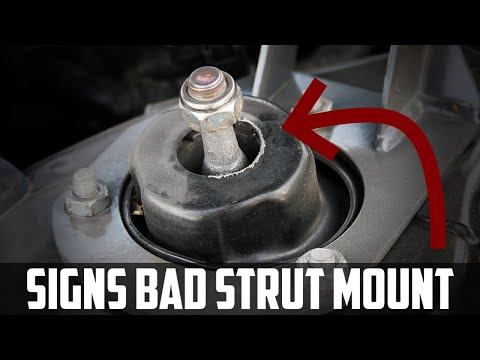
The video below visualizes how environmental stressors (like salt and grit) combined with physical impact can destroy a standard bump stop. It highlights that the bump stop’s job is twofold: protecting the shock from internal collision and, when integrated with a dust boot, protecting the shaft from external corrosion.
Energy Dissipation vs. Rebound:
Inferior bump stops act like bouncy balls—they store energy and release it violently, causing the car to "buck" after a big hit. High-quality GSW bump stops are designed with high hysteresis (internal damping). This means when they are compressed, they convert that kinetic energy into heat rather than bouncing it back into the chassis. This is crucial for NVH (Noise, Vibration, and Harshness) control. If your customer complains of a harsh "slap" sound when going over speed bumps, it is often because the bump stop has lost this energy-absorbing capability.
Who Needs a Bump Stop?
Every vehicle on the road requires functional bump stops, but the need is critical for vehicles subject to variable loads.
Every vehicle needs bump stops, but they are vital for trucks, SUVs, and cars that frequently carry passengers or cargo. In these high-load scenarios, the suspension operates closer to its maximum compression, engaging the bump stop more frequently as a load-bearing component.

Dive Deeper:
There is a misconception that bump stops only work during "emergency" impacts (like hitting a massive crater). In reality, on a fully loaded vehicle, the bump stops are active participants in the ride quality 30-50% of the time.
The Fatigue Challenge:
Because they are constantly being mashed, twisted, and heated, bump stops are subject to immense material fatigue. This is where the difference between a generic rubber block and a GSW engineered component becomes apparent.
A cheap bump stop will suffer from "compression set"—meaning after being squished 10,000 times, it stays squished. It loses its height and elasticity. Once it permanently compresses, there is a gap in the suspension travel, leading to a delay in engagement and then a sudden, harsh impact.
GSW’s Dynamic Fatigue Testing:
To ensure our products withstand real-world abuse, GSW subjects our rear bump stops to rigorous Dynamic Fatigue Testing.
- The Test: We simulate millions of compression cycles under varied environmental conditions.
- The Standard: A GSW bump stop must maintain its structural integrity and height specification after these cycles. We verify that the micro-cellular structure does not collapse or crack.
- The Result: When you install a GSW unit, you aren’t just installing a spacer; you are installing a component proven to survive the lifespan of the shock absorber. This is a critical selling point for fleet managers and B2B distributors who cannot afford downtime due to suspension failure.
How to Tell If You Need to Replace Your Bump Stops?
Diagnosis is usually visual, but auditory cues and ride quality changes are also strong indicators of failure.
You need to replace bump stops if you see them crumbling, missing chunks, or if they have completely disintegrated leaving only the mounting plate. Physically, if the material feels brittle or turns to dust when touched, immediate replacement is required to save the shocks.

Dive Deeper:
The most common failure mode for modern bump stops (especially those made of lower-grade foam) is Hydrolysis. This is a chemical reaction where moisture in the air breaks down the polymer chains in the foam.
Visual Symptoms:
- The "Orange Dust": Inspect the rear wheel wells. If you see orange or yellow powder covering the shock body or the lower control arm, the bump stop has disintegrated. It literally rots away.
- Disconnected Dust Boots: On many vehicles, the dust boot hangs from the bump stop. If you see the plastic boot sliding freely up and down the shock rod, the bump stop holding it has failed. This exposes the chrome rod to rock chips and rust.
Driving Symptoms:
- Harsh Bottoming Out: The driver will feel a jarring metal-on-metal slam when hitting potholes that previously felt smooth.
- Excessive Body Roll: Since the bump stop acts as a secondary spring, losing it can make the car feel less stable during hard cornering.
- Premature Shock Leaks: If a customer comes in with a leaking shock, always check the bump stop. It is highly likely that the bump stop failed first, allowing the shock to over-compress and blow its seals. Replacing the shock without replacing the bump stop guarantees the new shock will fail the same way.
For distributors, educating mechanics to look for "The Orange Dust" is a simple way to increase the attach rate of protection kits. It is a visual up-sell that is hard for a car owner to refute.
How to replace rear bump stops?
Replacing rear bump stops is a labor-intensive process that overlaps almost entirely with shock replacement, making "bundling" the smart choice.
To replace rear bump stops, technicians must remove the shock absorber from the vehicle and disassemble the upper mount. Because the labor cost far exceeds the part cost, it is standard practice to replace bump stops whenever new shocks are installed.

Dive Deeper:
From a B2B service perspective, the rear bump stop represents a "high-leverage" component. The part is inexpensive, but the labor to access it is significant.
The Workflow:
- Support the Axle: The vehicle is lifted, and the rear axle is supported.
- Remove Shock: Top and bottom bolts are removed.
- Disassemble Mount: This is key. The top mount must be taken off the shock rod to slide the old bump stop off and the new one on.
- Reassemble: The new GSW bump stop is seated (often with a friction fit) and the unit is reinstalled.
The Economic Argument:
Why would a mechanic ever put an old, half-rotten bump stop back onto a brand-new $100 shock absorber? It compromises the ride quality and voids the shock’s warranty in many cases.
- For the Distributor: Selling "Loaded Rear Shocks" (if available) or "Shock + Protection Kit" bundles is the best way to ensure quality control.
- For the Mechanic: Using GSW bump stops ensures fitment. Since we test our mounts and stops to OE geometric standards, they slide onto the shock rod and lock into the mount correctly. Cheap universal stops often have the wrong inner diameter, leading to them falling down the shaft and rattling.
Safety Note: When replacing, always ensure the bump stop is the correct length. A bump stop that is too short will fail to protect the shock. A bump stop that is too long will limit suspension travel and cause a rough ride. GSW’s cataloging ensures the exact spec match for the vehicle application.
Conclusion
Rear bump stops are precision-engineered energy absorbers, not just rubber cushions. They protect the entire suspension system from catastrophic impact damage. With GSW’s commitment to Dynamic Fatigue Testing, you can assure your customers that these components will survive millions of cycles without crumbling. Would you like to see our fatigue test reports comparing GSW materials against standard aftermarket foam?
About the Author
Root is a Content & Operations Specialist at GSWAUTOPARTS with 5 years of industry experience. Leveraging his close proximity to our manufacturing floor, Root specializes in documenting product details and production processes. He focuses on translating technical insights about rubber and chassis parts into clear, helpful information for our customers.


