
What do sway bar bushings do?
A vehicle’s suspension system relies on various components to maintain stability, and the sway bar bushing plays a crucial role in this intricate setup. Understanding its function is essential for ensuring a smooth and safe driving experience.
A sway bar bushing isolates the sway bar from the vehicle’s chassis, absorbing road bumps and reducing noise. It acts as a flexible cushion that allows the sway bar to pivot smoothly, actively preventing excessive body roll during cornering and maintaining optimal tire contact with the road.

Navigating through the complexities of automotive suspension helps us appreciate how these small but mighty components protect both the vehicle and the passengers. Let us examine the mechanics and symptoms associated with these essential parts.
What is a sway bar bushing?
At its core, this component is a robust piece of engineered rubber or polyurethane that mounts the stabilizer bar to the vehicle frame. It serves as the primary mounting point that dictates how effectively the stabilizer bar operates.
The bushing tightly grips the metal bar while providing enough flexibility for torsional movement. This dynamic relationship ensures that lateral forces are properly distributed across the axle.

From a physical standpoint, the bushing operates under constant torsional and radial loads. When a vehicle enters a corner, the sway bar twists to transfer weight, and the bushing must withstand this extreme frictional force without tearing.
Engineers utilize CAE Analysis to determine the optimal shape and thickness of these mounts. The design must strike a delicate balance: it needs adequate stiffness to prevent excessive deflection, yet enough compliance to absorb harsh impacts.
Material selection is paramount for this application. High-quality natural rubber compounds are often preferred for their superior elasticity and damping characteristics.
In terms of NVH (Noise, Vibration, and Harshness) control1, the bushing2 acts as a primary isolator. It actively blocks the transmission of high-frequency vibrations from the lower control arms directly into the cabin.
Without this isolating barrier, metal-to-metal contact would occur, leading to catastrophic wear on the sway bar itself and a highly uncomfortable ride for the occupants.
I recently watched a video demonstrating a standard replacement procedure on a RAM 1500, which perfectly illustrates how these bushings sit on the vehicle frame. Seeing the actual tear-down provides great context on why proper installation is critical for chassis longevity.
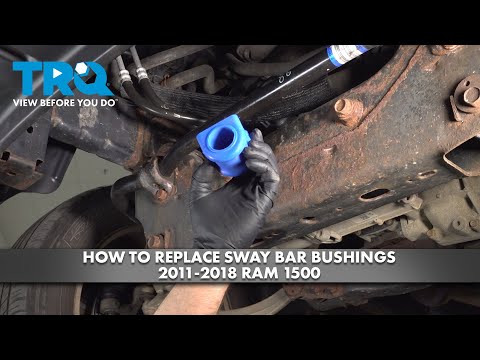
If a car owner asks what this part does, simply tell them: "It is like a heavy-duty shock-absorbing cushion for your suspension. It stops the metal bars from clanking together and keeps your car from leaning too far when you turn."
Can bad sway bar bushings cause steering wheel vibration?
Worn suspension components frequently manifest as unpredictable feedback in the driver’s hands. A degrading sway bar bushing is absolutely a common culprit behind steering wheel vibration.
When the rubber deteriorates, the sway bar moves loosely within its bracket. This excessive play translates road shocks directly into the steering rack, causing noticeable vibrations in the steering wheel, especially at highway speeds.

The physics of this vibration stem from compromised NVH isolation. As the bushing loses its structural integrity, it can no longer absorb the kinetic energy generated by road imperfections.
This unabsorbed energy travels through the stabilizer links and directly into the steering knuckles. Consequently, the driver feels a rhythmic shaking or jittering, which is often misdiagnosed as an unbalanced tire.
Material degradation plays a significant role in this symptom. Exposure to extreme temperatures, road salt, and engine oil causes the rubber to harden and crack, significantly reducing its Shore Hardness A rating predictability.
Once the material becomes brittle, the bushing cannot maintain constant pressure on the bar. The resulting gap creates a "clunking" effect, where the bar slams against the metal bracket during suspension articulation.
Addressing this vibration promptly is crucial for safety. Continuous high-frequency shaking can accelerate the wear on tie rod ends and steering gearboxes, leading to much more expensive repairs down the line.
To easily explain this to a customer: "Imagine running in shoes with worn-out soles; every pebble hurts your feet. Worn bushings do the same to your car, passing every bump straight up to your steering wheel."
Importance of Replacing a Bad Sway Bar
Ignoring suspension maintenance can severely compromise vehicle dynamics and passenger safety. Replacing a failing bushing or sway bar setup is never something to postpone.
A compromised sway bar system drastically increases body roll during cornering, reducing tire traction. Replacing these worn parts restores handling precision, ensures even tire wear, and prevents unpredictable vehicle dynamics during emergency evasive maneuvers.

The primary safety consequence of a failed bushing is the loss of lateral stability. When the vehicle enters a sharp turn, centrifugal force pushes the weight to the outside wheels, and a loose sway bar cannot effectively counteract this motion.
This excessive body roll fundamentally alters the suspension geometry. It causes the outside tires to ride on their edges rather than maintaining a flat contact patch, severely diminishing grip when it is needed most.
Furthermore, uneven weight distribution during braking and cornering accelerates tire degradation. You will often see accelerated wear on the outer shoulders of the tires, which drastically reduces their effective lifespan.
From an engineering perspective, the interconnected nature of the chassis means one failed component stresses the others. A loose stabilizer bar will inevitably put abnormal strain on the end links, often causing them to snap under heavy loads.
Restoring the system to its factory specifications guarantees that the vehicle reacts predictably to steering inputs. This predictability is the foundation of automotive safety, especially in adverse weather conditions.
Explain it to drivers like this: "A bad bushing makes your car feel like a boat swaying on the ocean when you turn. Replacing it anchors the car back down, making your steering tight, safe, and responsive again."
How long do sway bar bushings last?
The lifespan of these suspension mounts depends heavily on driving conditions and manufacturing quality. While they are durable, they are still considered a consumable wear item.
On average, a high-quality sway bar bushing lasts between 50,000 and 100,000 miles. However, severe driving environments, heavy towing, or poor road conditions can significantly reduce this timeframe, necessitating regular inspections.

The ultimate Fatigue Life of a rubber mount is dictated by its manufacturing process. Constant cyclical loading eventually breaks down the polymer chains within the rubber, leading to a loss of elasticity.
This is where advanced manufacturing techniques make a definitive difference. At GSW Autoparts, our specific Vulcanization process utilizes highly precise temperature and pressure controls to optimize the cross-linking of rubber molecules.
This proprietary Vulcanization method ensures a consistent Shore Hardness A rating throughout the entire batch. It creates a molecular structure that is highly resistant to tearing and environmental degradation from ozone or automotive fluids.
By maximizing the Tensile Strength of the rubber compound, our bushings maintain their shape and damping properties far longer than standard aftermarket alternatives. This translates to sustained NVH performance over tens of thousands of miles.
Ultimately, investing in a precision-engineered component minimizes downtime. Fleet operators and individual owners alike benefit from a part that resists premature aging, ensuring long-term reliability and safety.
Give your customers peace of mind by saying: "While standard rubber parts wear out quickly on rough roads, our bushings use an advanced baking process that makes the rubber incredibly tough, meaning you won’t have to replace them nearly as often."
Conclusion
Installation and maintenance are equally important: During installation, the bushings and brackets must be cleaned. Some models have directional markings on the bushings; they must be installed at the original factory angle to avoid premature aging due to preload torque.
After installation, the bracket bolts must be tightened to the specified torque to prevent loosening. For routine maintenance, it is recommended to check the bushing condition every 20,000-30,000 kilometers, avoiding prolonged contact with engine oil and road de-icing salt. Applying a rubber protectant periodically can delay aging.
For vehicles parked for extended periods, gently turning the steering wheel and moving the vehicle can prevent the bushings from losing elasticity due to prolonged static pressure.
Choosing bushings with GSW precision vulcanization technology can significantly extend their service life due to their stable molecular structure and anti-aging properties, ensuring the vehicle maintains excellent steering stability and ride smoothness.
Maintaining the integrity of your suspension is vital, and never underestimating what a sway bar bushing does can save you from costly repairs and unsafe driving conditions. Upgrading to premium, precision-vulcanized components ensures your chassis performs exactly as engineered. Contact the GSW Autoparts team today to discover how our advanced suspension solutions can elevate your product offerings and keep your customers safely on the road.
GSW offers attentive service and high-quality products, and many of our clients have long-term partnerships with us. You won’t be disappointed if you contact us.
About the Author
Root is a Content & Operations Specialist at GSWAUTOPARTS with 5 years of industry experience. Leveraging his close proximity to our manufacturing floor, Root specializes in documenting product details and production processes. He focuses on translating technical insights about rubber and chassis parts into clear, helpful information for our customers.


